Clips That Get Noticed: Filming Your Motocross Season on a Phone
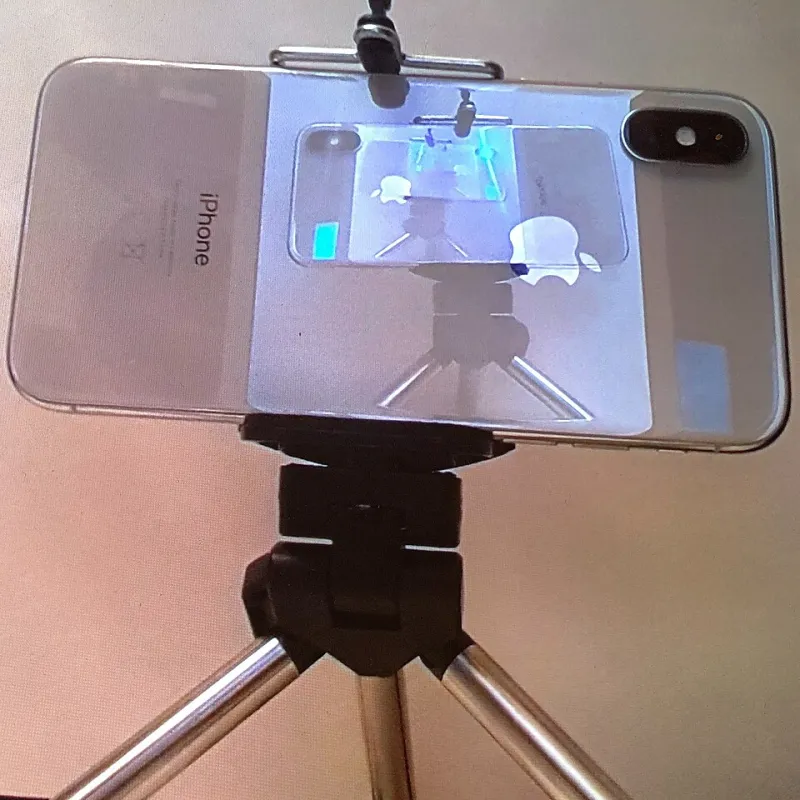
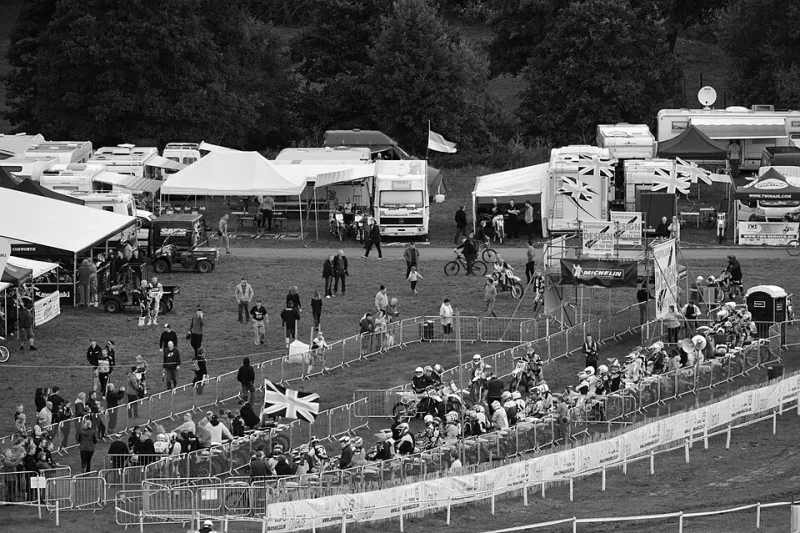
Photo: This image is a work by Wikipedia and Wikimedia Commons user C.Suthorn. When reusing, credit me as described in the Licensing information below. I would appreciate being notified (wikimail, talk page, email, Social Media) if you use my work outsid
Every paddock in Britain now has at least one phone on a tripod. Most of the footage never gets watched twice — shaky, wind-blasted, forty minutes long, and impossible to find the good bit in.
That's a shame, because the barrier between "bloke with a phone" and "footage that gets you noticed" is mostly technique, not kit. Here's how to get there.
Start with what's already in your pocket
A three-year-old phone shoots better video than most pro cameras did a decade ago. What it lacks is stabilisation, audio and reach — all of which are solvable.
Before you buy anything, know what you're trying to make. Two different jobs:
- Rider footage — onboard or helmet-mounted, for learning lines, showing pace, or building a rider profile.
- Track-side footage — a mate or parent filming from the bank, for the edit, the showreel and the club's socials.
They need completely different setups. Trying to do both with one flimsy mount is how you end up with ninety minutes of sky.
Mounts that survive a British race day
Chin bar. The best onboard angle going, for one simple reason: it sees what you see, and it's isolated from most of the vibration that shakes a helmet-mounted camera to pieces. A chin mount plus a cheap action cam or a phone in a rugged case is the sweet spot.
Chest mount. Steadier than the helmet, better sense of speed than the chin, and it shows the bars working — which people love. It also points at your knees when you're sat down, so be honest about how much you sit.
Handlebar or fork leg. Great for mechanical drama and suspension movement, terrible for everything else. Vibration here will make the footage unusable on some bikes; a foam pad under the clamp helps.
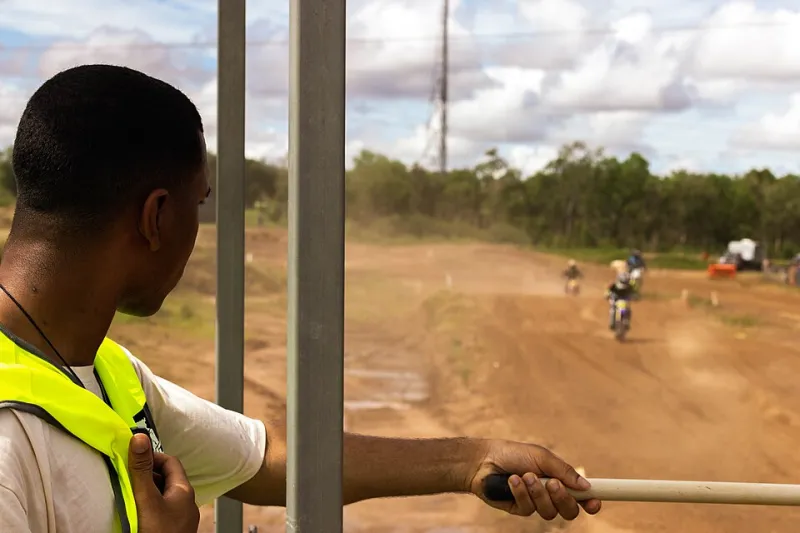
On the bank. Forget handheld. A tiny tripod on a fence post and a decent zoom beats shaky freehand every time. Pick a spot with a bank, a jump or a rutted corner and stay still for a whole race rather than panning wildly.
One mounting rule that saves more footage than any other: check the framing with the helmet on, in your riding position. Not held in your hand in the van.
Audio: kill the wind, keep the noise
Wind noise is the single biggest thing that makes motocross footage feel amateur. Phones and action cams both have tiny microphones in exactly the wrong place.
- Cover the mic. A foam windshield, a bit of fake fur, or even a strip of gaffer tape over the mic hole (not the lens) can transform the sound.
- Move the mic out of the airflow. An external mic tucked inside the helmet, behind the chin bar, is the single biggest audio upgrade available for the money.
- Record a separate bit of sound. Twenty seconds of a bike coming past at the fence line, recorded close, can carry a whole edit. Drop it under a slow-motion section and it suddenly feels like a film.
- Cut the raw wind. In the edit, duck or mute the audio in any clip where the engine is secondary. A bit of bike noise over a quiet shot is better than eleven minutes of whooshing.
Filming etiquette at UK tracks
This is where a lot of goodwill gets burned. A few ground rules that will keep you welcome:
- Don't stand anywhere you wouldn't stand without a camera. Flags and marshals outrank your shot. Every time.
- Never film from behind a jump landing or inside a flagged area. It's not brave, it's a liability, and the clerk of the course will have a word.
- Ask before filming an identifiable rider close-up, especially if you plan to post it. Most people are delighted; a few aren't, and they're entitled to say so.
- Keep out of the way at the gate. The start line is the busiest, tensest, least photogenic place in the paddock for anyone trying to do a job.
- Respect the club's rules on drones. Many UK venues ban them outright, and a drone over a live race is a serious safety issue, not a creative choice.
Youth riders and consent
If you're filming at a youth meeting, the rule is simple and non-negotiable: get a parent or guardian's permission before filming a child, and definitely before publishing anything.
A few practical points:
- Ask the club secretary whether there's a filming policy. Many youth meetings have one, and it usually exists for good reason.
- Keep it general. Wide shots of a pack racing are one thing; a close-up of an identifiable child with their name and race number is another.
- Never publish a crash involving a young rider without permission, however spectacular it was.
- If someone asks you to take a clip down, take it down. No argument, no lecture.
The edit: ninety seconds, not nine minutes
Here's the hard truth about showreels: nobody watches the whole thing. Aim for 60 to 120 seconds and treat the first five as the most important.
A structure that works every time:
- Hook. The best single shot you have — a roost, a scrub, a gate drop. No logo, no title card.
- Establish. Two or three shots that say where you are and what it feels like.
- Build. A run of clips getting faster and closer, cutting on the beat of whatever music you've used.
- Payoff. The biggest jump, the cleanest pass, the muddiest moment.
- Close. Your name, your number, your class, your club. Ten seconds, on screen, no voiceover.
A few editing habits that make a difference:
- Cut ruthlessly. If a clip doesn't earn its place, bin it. A great eight seconds beats a mediocre twenty every time.
- Don't over-slow-mo. Two or three slow sections in a minute is plenty.
- Keep the grade consistent. One look across the whole edit, not six filters.
- Use music you're allowed to use. The licensed library in your editing app is fine. Chart tracks will get you muted.
Building the season, not just the day
Keep a simple folder per meeting: raw clips, the two or three best stills, and a note on the conditions. By October you'll have a season's worth of material and a genuine story — the mud bath in January, the dry fast track in June, the meeting where it finally clicked.
That's what sponsors and club pages respond to. Not a flashy edit — evidence that you turn up, race, and can be relied on to produce something worth sharing.
Start with one race. One mount, one clean edit, one short film. That's the whole trick.