Spanners, Space and Silence: The Paddock Code That Keeps UK Race Days Sane
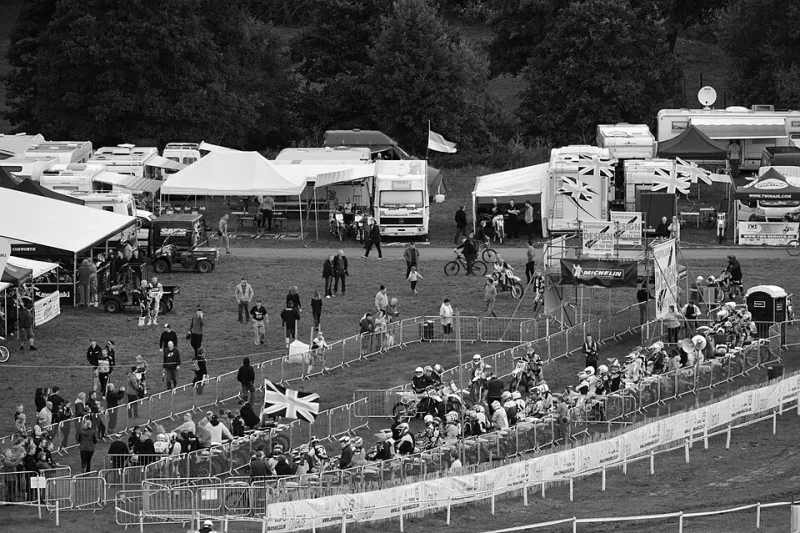
Photo: John Winder , CC BY-SA 2.0, via Wikimedia Commons
Sunday morning at a British motocross track has a rhythm. Vans roll in, tailgates drop, someone fires up a generator, and someone else immediately wishes they hadn't. The smell of race fuel mixes with bacon and coffee. Somewhere between signing on and the first practice group, an invisible rulebook starts doing the rounds. Nobody hands it to you at the gate. You learn it by getting a look, a muttered word, or — if you're really unlucky — a face full of roost from the rider whose spot you've just pinched.
Paddock law isn't official. It won't be pinned to the clubhouse wall. But it's the difference between a meeting that runs on goodwill and one that runs on gritted teeth. Here's the code, passed down through muddy transit vans and thermos lids.
Space Is Currency
Club paddocks are tight. Sometimes they're tighter than a drum kit in a phone box. Parking is not a competition. Don't sprawl across two bays because your awning needs room to breathe. Don't block a van door, a fire lane, or the one bit of hardstanding everyone is quietly eyeing up.
If you're squeezing in next to someone, ask. A simple 'mind if I park here?' buys more goodwill than a new set of tyres. Give people room to wheel a bike out, lift a ramp, or get a stretcher through. The paddock is a shared workshop, not your personal pit box.
The Queue Has a Memory
Practice groups, sign-on, the burger van, the toilets — British race days involve queuing. It's part of the culture. Don't hover so close behind someone that you're practically reading their race entry over their shoulder. Don't send a mate to hold a place while you finish a brew, then act surprised when the queue notices.
If you're running late, say so. Most people will shrug and let you in. What they won't forget is the rider who barges past because their race is apparently more important than everyone else's. The paddock has a long memory and a very short fuse.
Borrowing and Lending
Asking to borrow a spanner is a sacred paddock ritual. The answer is usually yes. The follow-up is where people come unstuck. Return it promptly, wipe the mud off, and say thanks. Don't wander into an open van and help yourself. An open van is not a tool library with a welcome mat.
If someone lends you a 17mm, a zip tie, or a splash of fuel, offer something back. Help them lift a bike, hold a gate, fetch a brew. Paddock law doesn't require exact change, but it does require gratitude. The rider who borrows well gets helped again. The rider who borrows badly gets a very polite 'sorry, mate' next time.
Noise: Know Your Neighbours
Generators, music, and endless revving are part of the soundtrack. They don't have to be the whole album. Keep the generator off when you don't need it. Keep the music at a level that doesn't invade three vans down. And please, don't sit in the paddock blipping the throttle for ten minutes because it sounds good. It doesn't. Not at 7.45am.
Early mornings are for coffee and quiet checks. If you're warming a bike, do it where it belongs and keep it brief. A paddock doesn't need a hero soundtrack. It needs a bit of situational awareness.
Clear Your Spot
Take your rubbish home. Not to the bin that's already overflowing. Home. Use a drip tray, sort out oil spills, and don't leave old tyres lying about like landmines. If you've been parked on grass, try not to leave a trench behind. If you've made a mess, clean it up before you drive off.
Leaving a clean patch is the quietest thank-you you can give a club. It also means the next meeting starts with less hassle and more goodwill. That's worth more than a podium sticker.
Kids, Dogs and Moving Bikes
Paddocks are brilliant places for families. They're also full of moving bikes, hot exhausts, and riders who are late for practice. Keep kids close. Keep dogs on leads. Don't let either wander into the path of someone wheeling a bike back from scrutineering. If you see a child heading for a blind corner, say something. It's not being bossy; it's being useful.
Help, But Read the Room
If someone is struggling with a stand, a bike, or a jammed axle, offer a hand. Most riders will take it. But don't grab someone's bike without asking, and don't crowd around a rider who's had a spill. Get a marshal. Give them space. There's a difference between a hand and a hindrance.
The Apology Clause
Eventually, you'll get it wrong. You'll park in the wrong spot, borrow something and forget it, or let your generator run too long. When that happens, apologise. Properly. Most paddock disagreements end with 'no worries, mate' and a shared brew. Paddock law has no fines, but it does have a memory. Use the apology clause before it becomes a grudge.
You don't need to be mates with everyone at the track. You just need to be the person nobody groans about when you pull in. That's the whole law. Everything else is just detail.