The Waiting Game: How to Pass Cleanly in British Mud
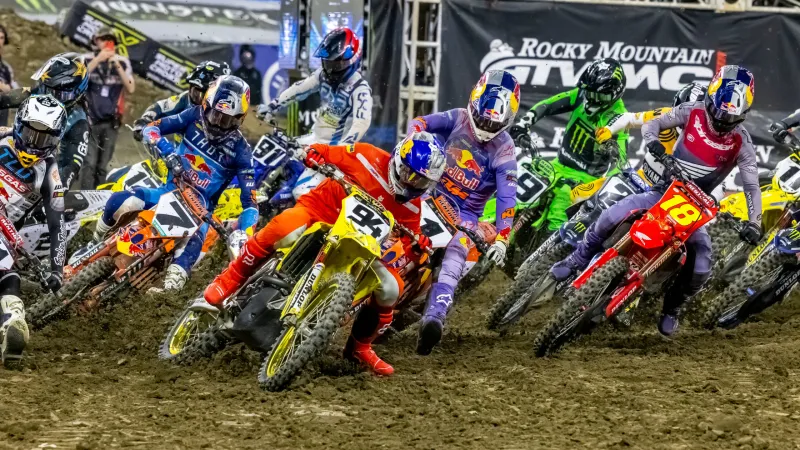
Photo: motocross rider overtaking through muddy ruts British track, via www.supermotocross.com
Mud rewrites the overtaking rulebook. On a dry track you can square off a corner, block-pass a mate and be gone before the roost settles. In British winter conditions that same move usually ends with both of you picking mud out of your goggles and pretending it was a racing incident. Clean passes in the slop come from reading the ground, picking a line nobody else wants and knowing exactly when to go. It is less about being the bravest rider on the gate and more about being the smartest one for twenty minutes.
Read the ground before you read the rider
Most club racers spend the first lap staring at the rider ahead. In mud, stare past them at the track. Look for the darker, tackier strips where water has drained and the surface still has some bite. Look for the pale, glossy patches that look fast and feel like ice. Look for ruts that hold a line and ruts that have been chewed into a mess by riders sitting down and spinning.
On a soggy track the conventional inside line is often a trap. Everyone dives for it, the entry gets polished, and by mid-race it is a greasy trench. The outside can be slower to enter but faster to exit, especially if it has a bit of grass or firmer ground on the edge. Watch where the fast riders in practice are putting their wheels. If the same rider takes the same unusual line three laps running, that is not a mistake. That is information.
Braking is your real overtaking weapon
In the dry, passes happen on the throttle. In mud, they happen on the brakes. If you can brake later than the rider ahead without locking the front or washing the front end, you have a passing opportunity before the corner even starts. The trick is to brake earlier than you think, but lighter and smoother, releasing the lever progressively as you tip in. Grab a handful in the wet and the front will tuck before you can say 'hold my goggles'.
Pick a braking marker on the approach that is yours, not theirs. If you follow the rider ahead into the same rut, you inherit their pace and their spray. Move half a bike width offline, brake on the firmer ground, and carry a little more speed into the turn. You do not need to outbrake them by five metres. Half a metre and a cleaner release is enough to get alongside.
Stand up, stay loose and let the bike move
Mud is unpredictable, so your body needs to be the suspension. Stand tall with your elbows up, knees gripping the bike and weight through the pegs. A seated rider in deep ruts gets bounced around and loses the front. Standing lets the bike pitch and roll underneath you while you keep your eyes up and your weight centred.
When you commit to a pass, do not lean into the rider. Lean the bike, keep your body upright and use the rut to guide you. If you are passing on the outside, put your weight on the outside peg and let the bike carve. If you are passing on the inside, get the bike turned early and be ready for the exit to be sloppy. Muddy exits reward the rider who gets on the throttle a fraction later but with the bike straighter.
Follow first, pass second
There is no shame in spending two or three corners behind a rider before you make a move. Call it the setup lap. Watch which ruts they favour, where they brake, where they stand the bike up and where they get defensive. Most club racers defend the inside, so the outside line is often available if you are patient enough to take it.
Use the three-second rule: if you have been close for three seconds and the gap is not growing, you have learned enough. If the gap is growing, they are faster and you should settle in rather than force a move that puts you both on the floor. The best pass is the one that looks inevitable rather than desperate.
When to force it and when to wait
Force the move when the rider ahead is clearly slower in one specific place, when they are struggling to hold a rut, or when they are a lapped rider who is not moving over. Force it when you have a clear line and enough room to make the pass without contact. Do not force it when you are both fighting for the same piece of track, when the rider ahead is unpredictable, or when the move requires you to land on them to make it stick.
Etiquette matters in the mud. If you are going to pass, pass cleanly and hold your line afterwards. Do not chop across the front wheel of the rider you just passed. Do not use the outside of a corner to push them wide into the fencing. If you make contact, a quick nod or a wave on the next straight goes a long way. The paddock has a long memory and a short list of riders who get the benefit of the doubt.
Drills to try on a practice day
You do not need a race to practise passing. Set up a simple drill with a mate on a practice day. Pick a corner with two viable lines, one inside and one outside. Have your mate take the inside and hold it at a steady pace. Your job is to approach on the outside, brake on the firmer ground, release smoothly and get alongside without touching. Swap roles after ten minutes.
Another useful drill is the brake-release drill. Find a straight with a soft entry. Brake early, release smoothly and tip in without grabbing. Do it ten times, then do it following a mate. The goal is to make your braking so predictable that you can do it while looking at a line rather than at your front wheel.
Finally, practise the pass itself. Start behind a mate, follow for two corners, then commit on the third. Do not worry about speed. Worry about line choice, body position and making the move clean. In a race, that repetition will be worth more than any brave dive up the inside.
Muddy passes are not won by the rider who wants it most. They are won by the rider who waits, reads the track and then moves with purpose. Be patient, be clean and be gone.