The Five-Minute Recce: How a Soggy Track Walk Sharpens Your First Lap
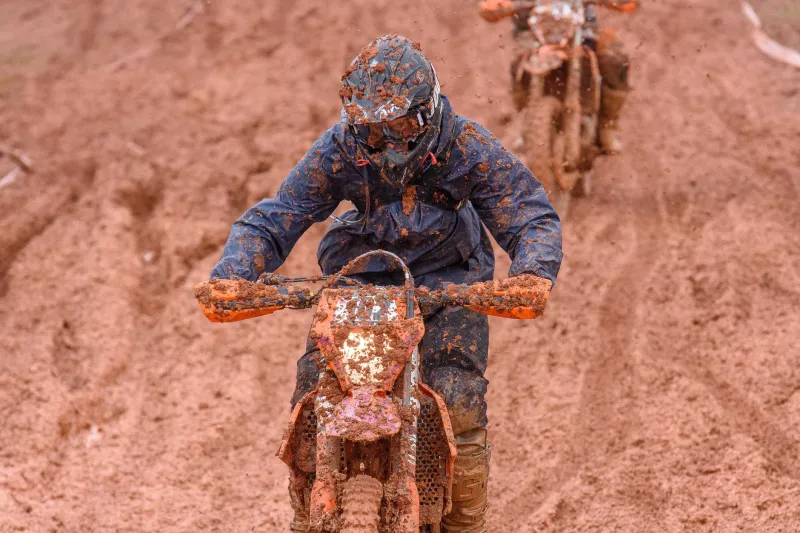
Most riders treat the track walk as a social stroll: helmet off, hands in pockets, a quick look at the first turn and a vague nod at the big jump. Then the gate drops, the pack fans out, and everyone discovers the same bog at the same moment. On a cold, cut-up British circuit in November, that five minutes on foot is one of the few chances you get to think before the mud starts flying.
This is not about walking the whole track like a surveyor. It is about turning a quick recce into a usable first-lap plan — one that keeps you out of trouble, helps you find traction and gives you somewhere to go when the obvious line turns into a trench.
Start at the gate, not at the burger van
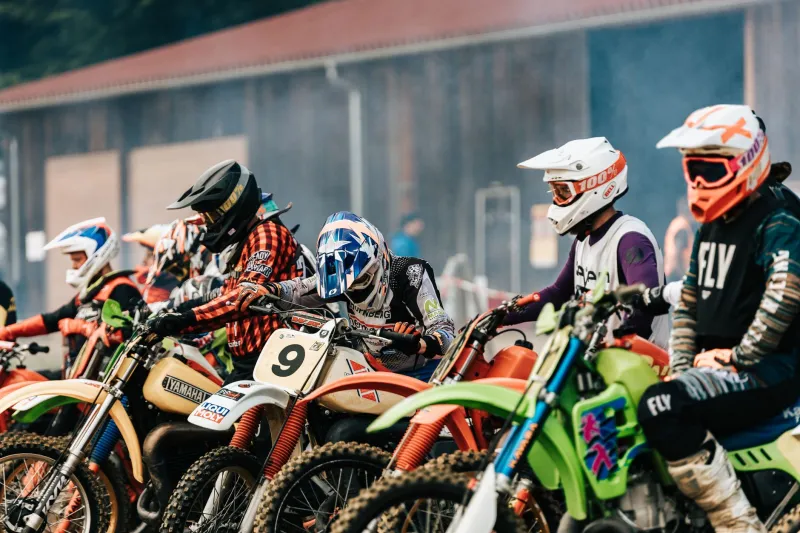
The walk begins before you set off. Stand at the start gate and look at the first 100 metres properly. Where does the pack funnel? Which side of the first turn is wider? Is there a low spot just after the gate that will collect water and roost? On a wet track, the first turn is often less about bravery and more about avoiding the rider who has already committed to a line that does not exist.
Look for the camber. If the ground falls away to the left, the inside line may drain better but get chopped up faster. If the right side is flatter, it might hold a cleaner arc for longer. You do not need a perfect plan; you need an exit. Ask yourself: if the first turn becomes a queue, where is my escape route?
Read the ruts like a line map
A rut is not just a groove. It is a record of what the ground is doing. On a wet UK track, the useful ruts are the ones with a firm base and somewhere for the water to go. The bad ones are the deep, sloppy channels that swallow a front wheel and punish anyone who rolls in half-hearted.
Walk a few metres along the worst section and look at the edges. Are they firm enough to hold a tyre? Is the rut getting deeper on entry or exit? Does it run into standing water, or does it lead to a drier patch? If a rut ends in a puddle the size of a wheelbarrow, it is probably not the line for lap one. If it feeds into a firm exit, it might be worth the commitment once the pack spreads out.
Also check the entry. Riders often look at the rut itself and ignore the two metres before it. If the entry is soft and chopped, you will arrive sideways no matter how good the groove looks. A slightly wider line with a cleaner approach can be faster than the deepest rut on the track.
Find where the water leaves, not where it sits
Standing water is obvious. Drainage is the more useful clue. Look for the low points, the off-cambers and the places where the track falls away into the trees or toward a ditch. Water tells you where the ground is weakest, but it also tells you where the track will change fastest once 30 bikes have been through it.
On a cold day, the ground can hold water longer than you expect. The top may look tacky while the base is still greasy. If you see a shiny patch with no tread marks through it, treat it with suspicion. If you see a line where riders have been getting drive and the water has been pushed aside, that is a signal. The track is already telling you which parts are working.
Check the exits of corners as carefully as the entries. A wet corner can have a decent rut and still be useless if the exit is a swamp. Look for firm ground, roots, gravel or a drier shelf where the bike can stand up and drive. That is where laps are made.
Exit traction is the bit everyone forgets
Riders spend a lot of time looking at braking bumps and very little time looking at where they will open the throttle. On a soggy track, the exit is often the difference between a clean lap and a workout. Walk through the corner and pick out the point where you want the bike to be upright and driving. Is there a drier line? Is there a patch of harder ground? Is the obvious exit already trenched by practice?
If the exit is soft, plan to be patient. That might mean squaring the corner off, running a wider line or short-shifting to keep the rear tyre from spinning. The track walk is the time to decide that, not halfway round lap one with mud in your goggles.
Flags, marshals and the bits you cannot ride
A track walk is also a safety briefing if you use it properly. Note where the marshal posts are, especially on blind sections, jumps and the outside of fast corners. Look at the flag positions and think about what you can actually see from the seat. A yellow flag on the far side of a jump might not be visible until you are already committed, so know where the tricky spots are before the race starts.
Check the sight lines. If you cannot see a marshal from the riding line, you need to be more cautious in that section, not less. On a wet track, stopping distances are longer and options are fewer. Knowing where help is, and where you need to look after yourself, is part of riding smart.
Build a first-lap plan you can actually use
You do not need to memorise every bump. Pick three things: a start-line plan, a first-turn escape route and one section where you will be deliberately conservative. Maybe you will take the outside into turn one to avoid the pile-up. Maybe you will avoid the deep rut on the far side until it clears. Maybe you will short-shift down the back straight because the exit is boggy.
Then add one opportunity. There is always a corner where the crowd goes left and the ground says right. If you spot a drier exit or a cleaner rut on the walk, mark it. That is your lap-one gamble — not a blind charge, but a decision made with your boots on the ground.
The walk is not a group tour
It is tempting to drift along with the same group of riders, listening to the same opinions. Break away for a minute. Stand still at the first turn. Look back up the start straight. Walk the exit of a corner from the outside in. You will see more on your own than you will in a moving huddle.
And keep it brief. Five focused minutes are worth more than a 20-minute wander. You are not trying to predict every rut; you are trying to arrive at the gate with a plan. In wet, cold British conditions, that is often the difference between a first lap that settles you and one that spits you into the fence.
At DemonMX, we would rather see a rider walk the track with purpose than wring the throttle and hope. The ground is already talking. Get off, have a look and listen.