Wellies, Earplugs and a Folding Chair: Your First British Motocross Meeting, Sorted
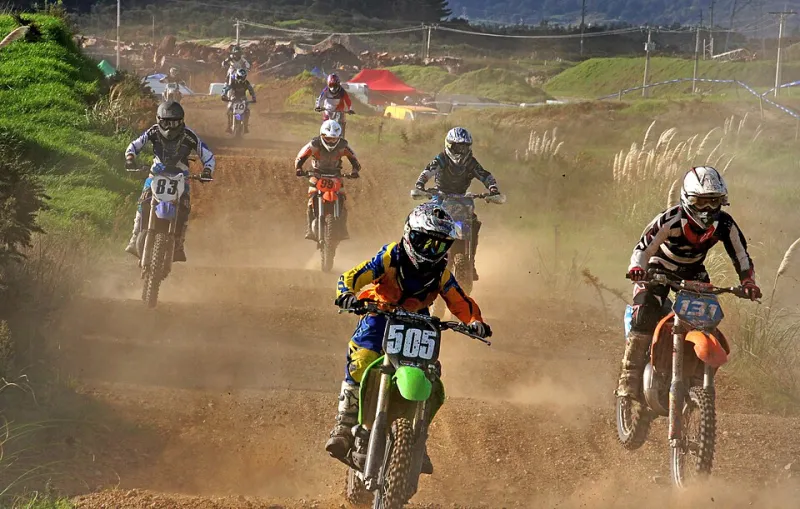
Photo: Bernard Spragg. NZ from Christchurch, New Zealand, CC0, via Wikimedia Commons
You've watched the edits, you've sent the 'should we go?' text, and now you're standing in a field at 8:40am with a flask and a sinking feeling that you've underdressed. Good. That's the motocross spectator's baptism, and it's worth every muddy sock.
Club motocross is one of the best-value days out in British motorsport. A tenner or so on the gate, a burger van doing steady trade, and more actual racing in one afternoon than some series manage across a whole season. You don't need to know the difference between MX1 and MX2 to enjoy it. You just need to know where to stand and what to shove in the car boot.
Choose the meeting to match your appetite
Start with a club fixture rather than a national. Local ACU and AMCA club meetings are relaxed, usually easy to park at, cheap to get into, and you can drift between fences without queuing behind anyone. You'll see everyone from wobbly first-year youth riders to fast lads who should probably be racing higher up.
If you want the big-day atmosphere, a British Championship round at somewhere like Hawkstone Park or Canada Heights delivers hillside viewing, a proper crowd and a real sense of occasion. Budget a bit more on the gate, expect a longer walk from the parking field, and wear boots you genuinely don't care about.
Dress like the forecast is lying
British motocross weather is a negotiation, not a forecast. A hilltop track can be baking at 9am and horizontal-rain miserable by two o'clock, and the wind will find you no matter which bank you hide behind.
Waterproof walking boots or wellies are non-negotiable. Trainers, however fashionable, will end the day as mud sculptures. Bring a proper waterproof shell rather than a poncho that turns into a kite, plus layers you can strip off and a hat that stays on. In summer, pack suncream anyway — the same field that drowned in April will roast you in June with no shade for 300 metres in any direction.
One more thing: ear defenders. The noise is the best bit and also the thing that surprises first-timers most. A 450cc four-stroke at full chat, three metres away, is genuinely loud. Kids' ears especially deserve looking after.
The kit bag that earns its keep
You don't need much, but the things you forget are the things you'll curse:
- Folding chairs or a lightweight mat, because standing for six hours is a young person's game
- A flask and snacks, since the burger van queue hits hard at lunchtime
- Cash, including a few fivers. Some gates and vans still prefer it, and card signal in a field is a lottery
- Hand wipes and a roll of loo roll — you'll work out why
- A power bank, spare socks and a bin bag for wet kit
- A small rucksack you can actually carry, not a wheelie case
Where to stand, and where absolutely not to
Never, ever stand inside the course tape. Not for a photo, not for a better angle, not because 'the gap was already there'. Bikes come off line, riders make mistakes at 40mph, and a motocross bike weighs the best part of 110kg before you add a human being.
Standing on the outside of a corner is the classic spot: you get the braking, the line choice and the drive out. Banks and hillsides give you a wide view of several sections at once. Avoid the bottom of a jump landing, avoid the immediate exit of a blind crest, and stay well back from the fence at the start straight, where the pack arrives in a wall of noise.
If a marshal in high-viz waves you back, move first and ask questions later. Those people are the reason the meeting runs at all, and they're not being difficult for fun.
How the day actually runs
Practice and qualifying tend to fill the morning, then it's motos through the afternoon, grouped by class. Races are typically 15 to 20 minutes plus two laps, so a class might be on track, off, then back on again an hour later. Keep hold of a programme or screenshot the timetable — most clubs post it on socials the night before.
You'll hear the two-minute board go up, then the 30-second board, then the gate drops and roughly 30 bikes try to occupy the same six feet of dirt. That first-corner scramble is the spectacle. Watch it from a safe distance and enjoy the chaos.
Flags, translated into plain English
- Chequered flag — race over, and the winner is whoever crossed the line first
- Red flag — stop, race stopped immediately. Riders roll round slowly, and everyone waits
- Yellow flag — danger ahead, riders must slow and must not jump. No overtaking
- Black board with a number — that rider must pull off and report to the clerk of the course
- Red cross or medical flag / marshal sprinting — a rider is down and medics are on track. Give them room and keep still
If the racing stops for a while, that's usually why. It's not a delay for the sake of it.
Paddock manners for people in normal shoes
Paddock access is one of motocross's great charms, so don't spoil it. Ask before photographing someone's kids. Don't touch bikes, tools or fuel cans without being invited. Keep out of awnings unless you're welcomed in. Give way to anyone pushing or riding a bike, and keep dogs on a lead even if the sign has blown away. A cheerful 'good luck' costs nothing and gets you a long way.
Bits nobody mentions
Arrive early — the good spots and the firm parking go first. Note where you've parked, because every field looks identical at 5pm. Take a photo of the gate you came in through. Bring a mate who's never been, because half the fun is watching their face the first time a pack comes past.
Then go home, hose the mud off your boots, and start looking at next weekend's fixtures.