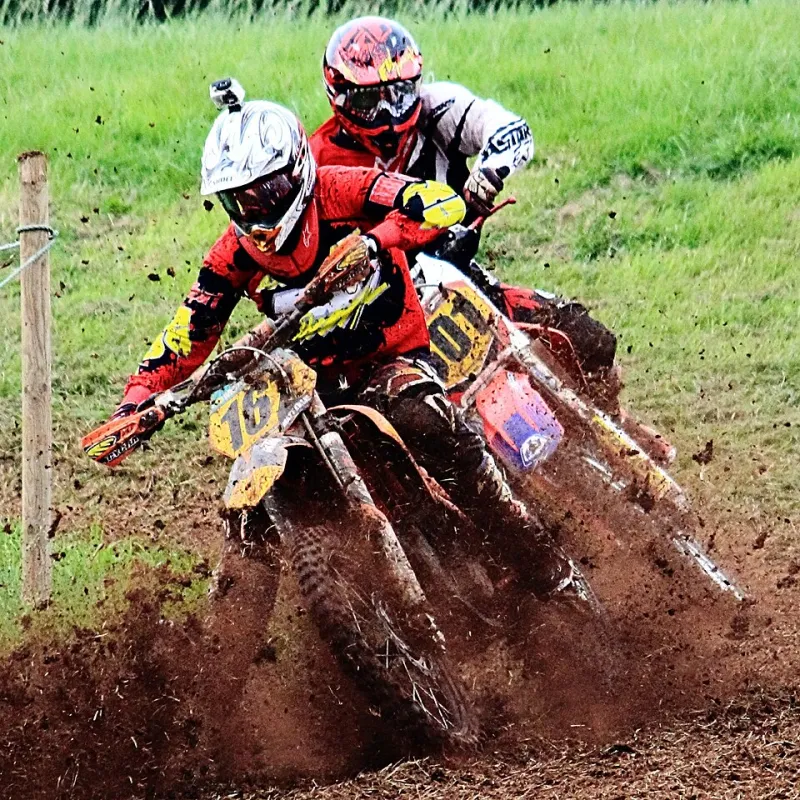
Claggy Ground, Clear Choices: Mud Tyres That Actually Bite on British Tracks
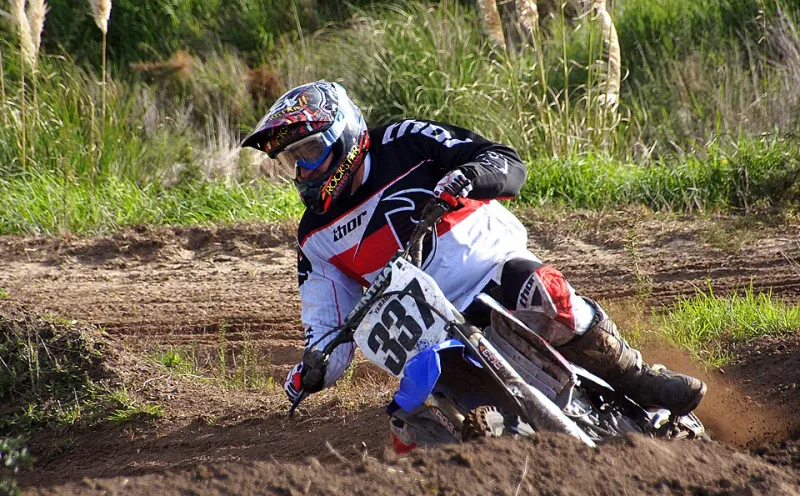
Photo: Bernard Spragg. NZ from Christchurch, New Zealand, CC0, via Wikimedia Commons
The British Winter Isn't a Setting, It's a State of Mind
There's soft ground, and then there's the stuff you find at a club track in February — half clay, half puddle, all attitude. Any tyre can look the part in a showroom. The real test is what happens when you roll off the throttle coming into a rut that's decided to close itself overnight.
So this isn't a spec-sheet trawl. It's what riders in the UK actually bolt on when the forecast has more rain symbols than numbers, and why.
Mud Terrain Isn't One Thing
Most manufacturers label their soft-ground tyre as "mud" and move on. In practice you're choosing between two fairly different animals.
Tall, widely spaced knobs clear fast. The gaps let wet clay eject rather than pack in, so the tyre keeps finding fresh edges. The trade-off is that on hardpack or rock — which almost every UK track has a strip of somewhere — those tall blocks squirm about like they'd rather be somewhere else.
Shorter, tighter blocks with deeper voids are the compromise a lot of club riders end up on. They clear well enough in the wet but don't fold up the moment the line dries out between motos.
If you only ride one track and it's proper bog all winter, go aggressive. If you're at a different venue every fortnight — which is most of us — the middle ground will cost you less in the long run.
What the Tread Is Actually Doing
Watch a rear tyre out of a wet corner and you'll see two jobs happening at once. The front edge of each block digs and pulls; the gap behind it gives the mud somewhere to go. Get the gap wrong and the block packs solid, at which point you've effectively fitted a slick with delusions.
Two things matter more than knob height:
- Shoulder blocks — the ones on the edge of the carcass. These do the work when you're leaned over in a rut. A soft tyre with weedy shoulders will let go without much warning.
- Block spacing pattern — staggered or alternating rows clear better in sticky clay than an even grid, because the mud has a path out rather than a dead end.
Compound: Softer Than You Think, Not Softer Than You Need
Here's the bit riders get wrong most often. In cold, wet conditions a softer compound does warm up and hook up better than a rock-hard one — but a full soft becomes a liability the moment the sun comes out and the racing line turns into a polished groove.
For a typical UK winter club meeting — cold start, damp all day, maybe one dry moto — a soft-to-medium sits in the sweet spot for most riders. If you're racing through summer on a track that's watered, you want medium at the very least, and you can stop apologising for it.
One more thing worth saying out loud: a worn mud tyre is not a mud tyre. Once those blocks round off, you're paying for the sticker on the sidewall and getting hardpack performance in a bog.
Pressures: The Cheapest Speed You'll Ever Find
Ask ten riders at a wet track what they run and you'll get ten answers, most of them lying slightly. The practical range for a soft-ground rear in British winter conditions sits low — but not so low you're risking a pinch flat on the square-edged stuff.
A sensible starting point is slightly softer than your dry setup at both ends, then adjust to feel rather than to a number:
- Start a touch soft. Ride two laps and check how much the tyre is rolling over on the shoulder under load.
- Drop a little more if it's genuinely standing water. Traction improves, but so does the risk of rim damage — check your pressures cold, and check them again before each moto.
- Add a couple of psi if the track dries. A soft pressure on a hard, dry line will feel vague and knife-edge in ruts.
Also: tubes. In muddy going you're more likely to be running low pressures, so a decent heavy-duty tube or a mousse setup is cheap insurance. Nothing ends a race day faster than a pinch flat in the first moto.
What Riders Report Back
The consistent feedback from wet British tracks isn't about brands — it's about behaviour.
- Front-end confidence comes from a tyre that keeps a predictable line in ruts. If the front wants to climb out of ruts rather than track them, you'll fight it all moto. Look for a rounded profile with decent shoulder support.
- Rear traction in clag comes down to clearing. Riders who struggle in deep mud are usually on a tyre that's packed solid by lap three, not one that lacks grip on lap one.
- Braking stability is where aggressive mud tyres split opinion. Tall blocks can feel skittish under hard braking on the approach to a wet corner. If you're a late braker, that's a real consideration.
The Honest Verdict
There isn't a magic mud tyre, and anyone telling you otherwise is probably selling one. What works is matching the tyre to the ground you'll actually ride, keeping pressures honest, and replacing them before the blocks give up entirely.
Ride a different track every weekend? Fit something that clears well but doesn't fall apart on hardpack. Ride one bog every weekend? Go aggressive and accept the compromise. Either way, spend ten minutes on pressures before your first moto — it's worth more lap time than most of the bolt-on parts in the paddock.